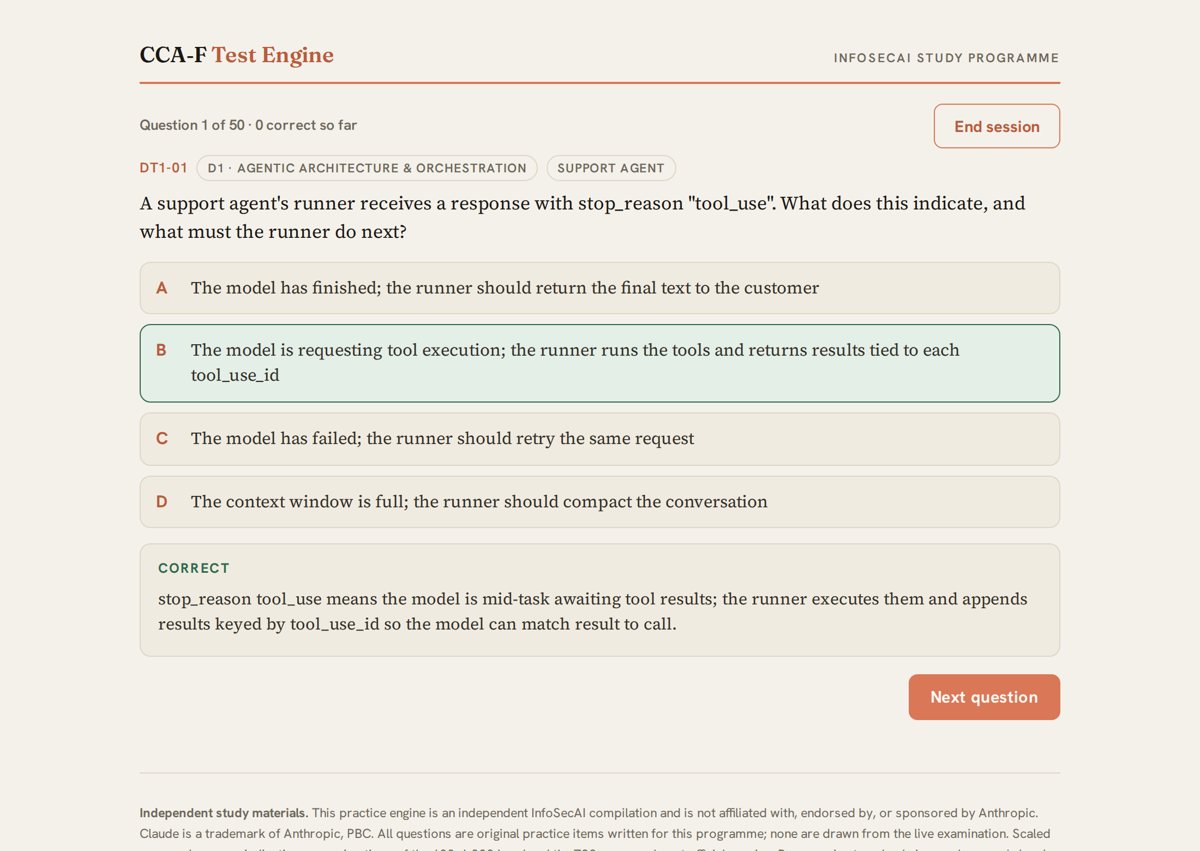
A 300‑page study manual, a five‑paper mock examination booklet, an interactive test engine, and a 150‑card flashcard deck. 550 original scenario questions, every single one with fully worked reasoning, built to the published exam blueprint.
Every question is authored once into a single structured bank; the manual, the booklet, and the engine are generated from it, so print and interactive can never disagree.

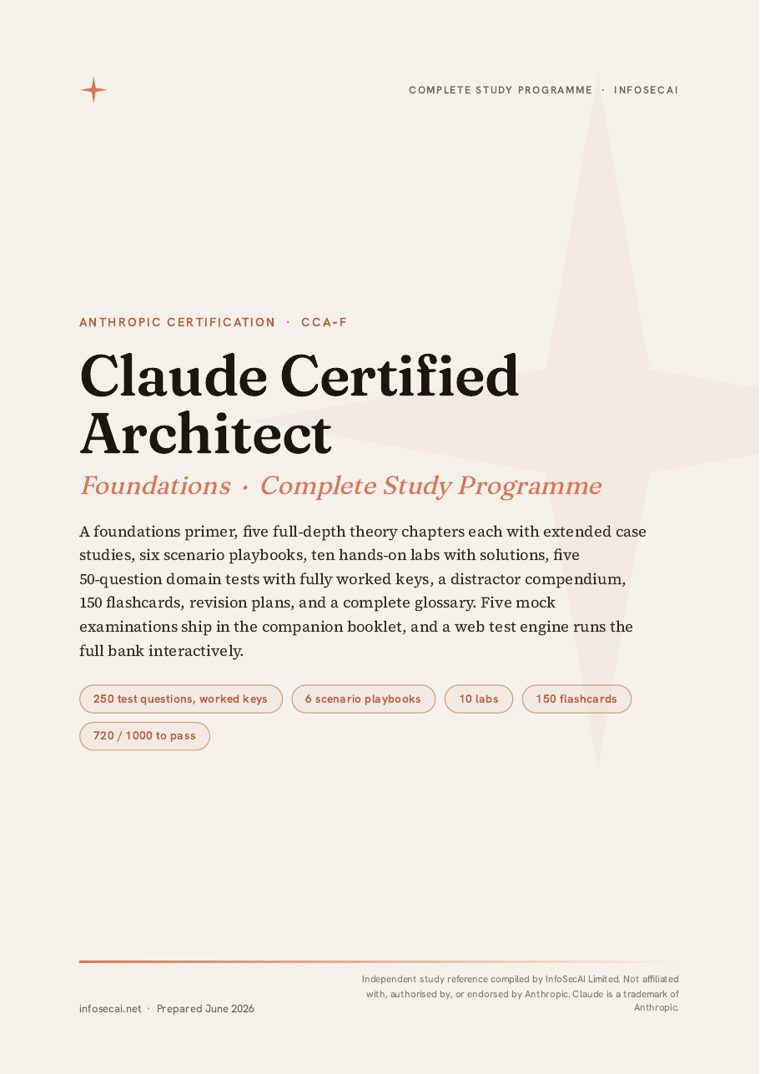
A foundations primer, five full‑depth domain chapters with extended case studies, six scenario playbooks, ten labs with solutions and build recipes, a distractor compendium with twenty‑two worked eliminations, 250 test questions with worked keys, and a complete revision toolkit.

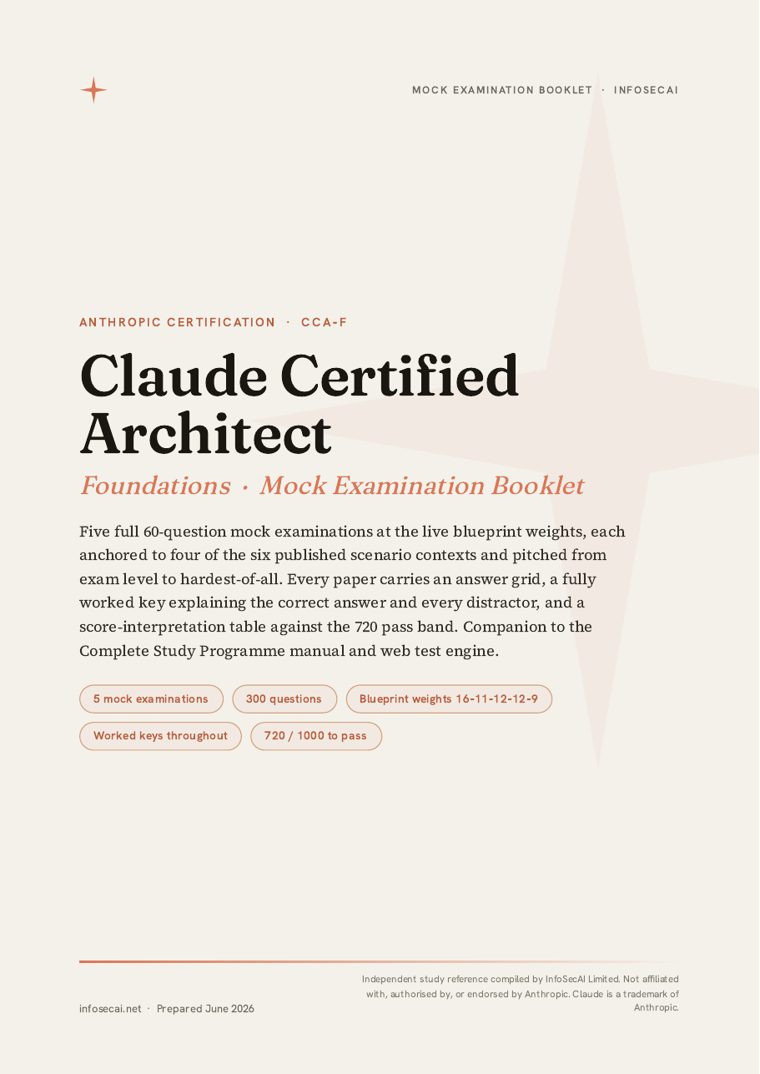
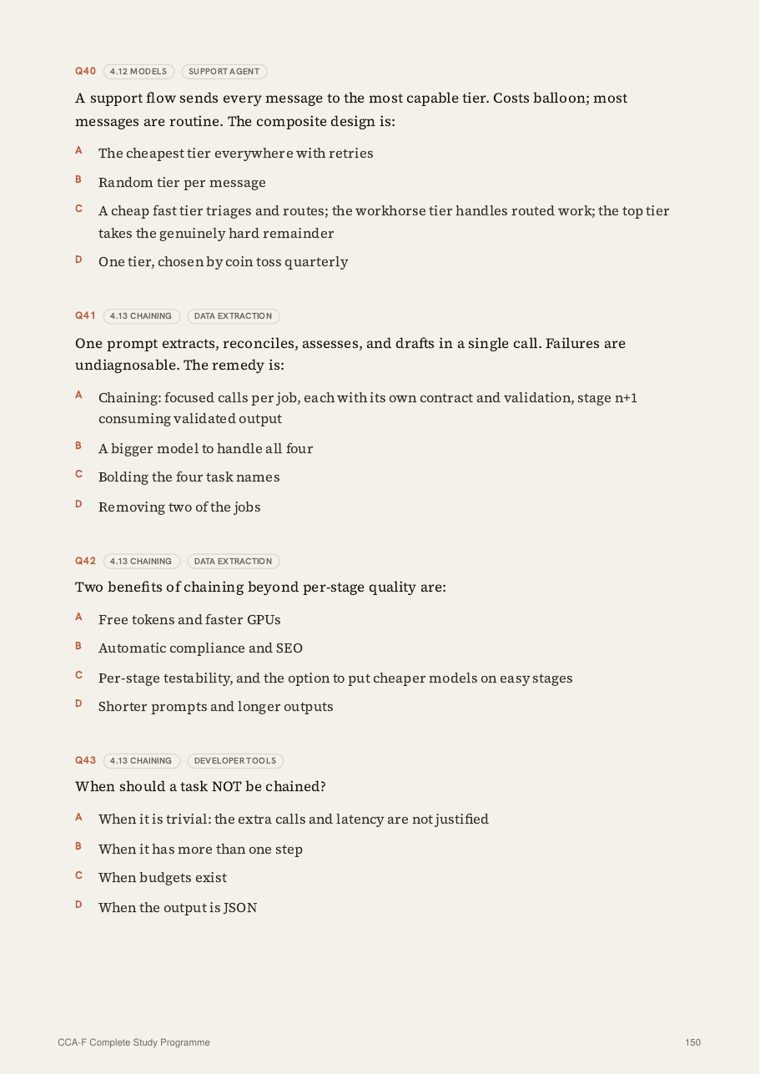
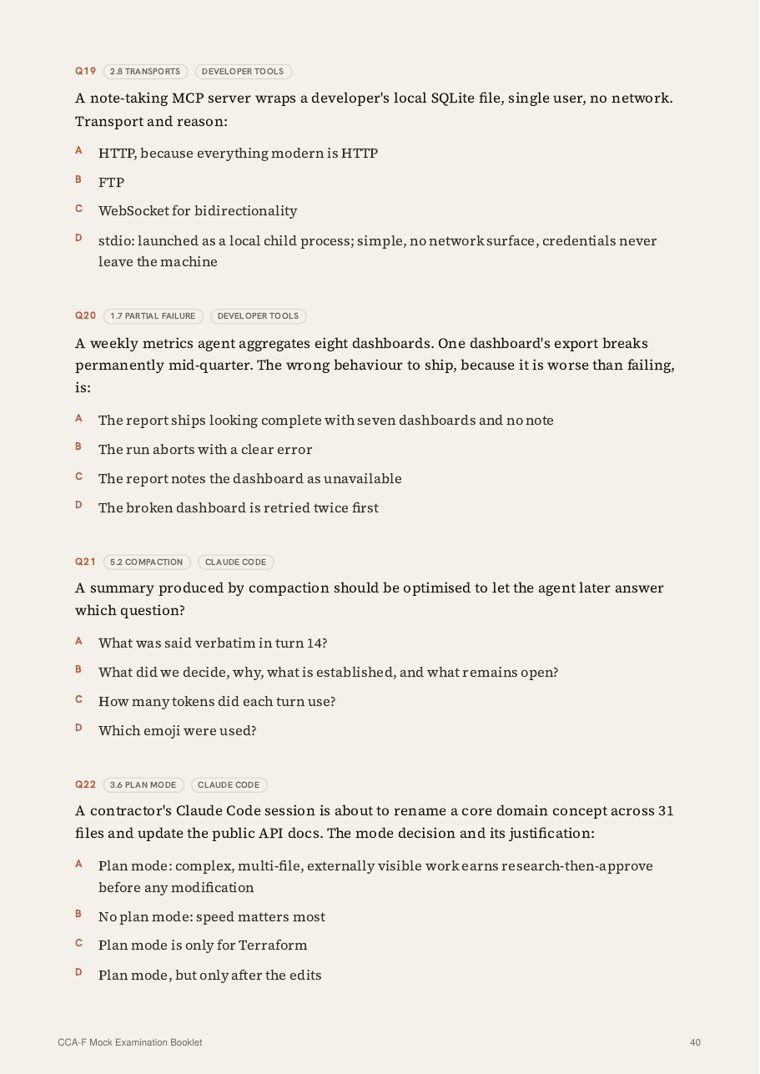
Five full 60‑question papers at the live blueprint weights, pitched from exam level to hardest‑of‑all, with answer grids, keys that explain every distractor, and score‑interpretation tables against the 720 band.

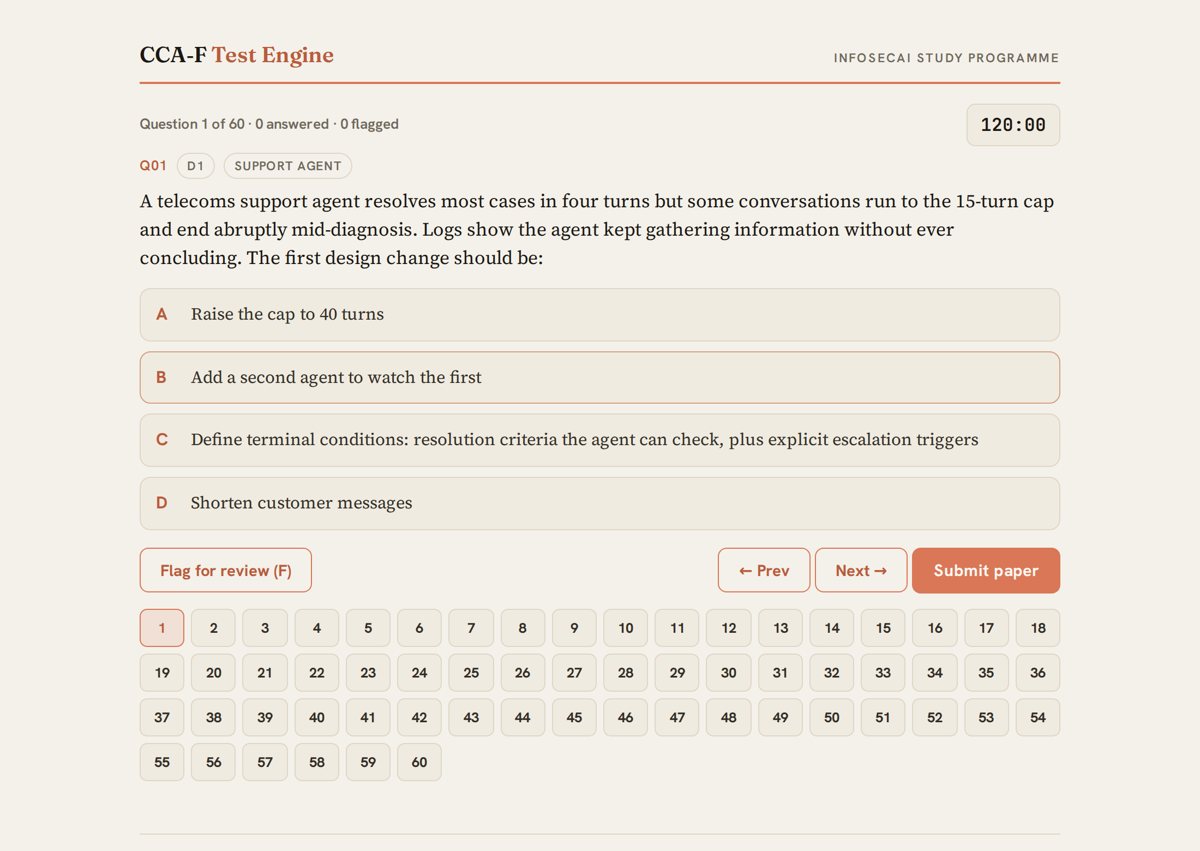
All 550 questions in your browser: study mode with per‑option feedback, exam mode with the 120‑minute clock and scaled scoring, full keyboard control. Progress stays on your device; nothing is sent anywhere.
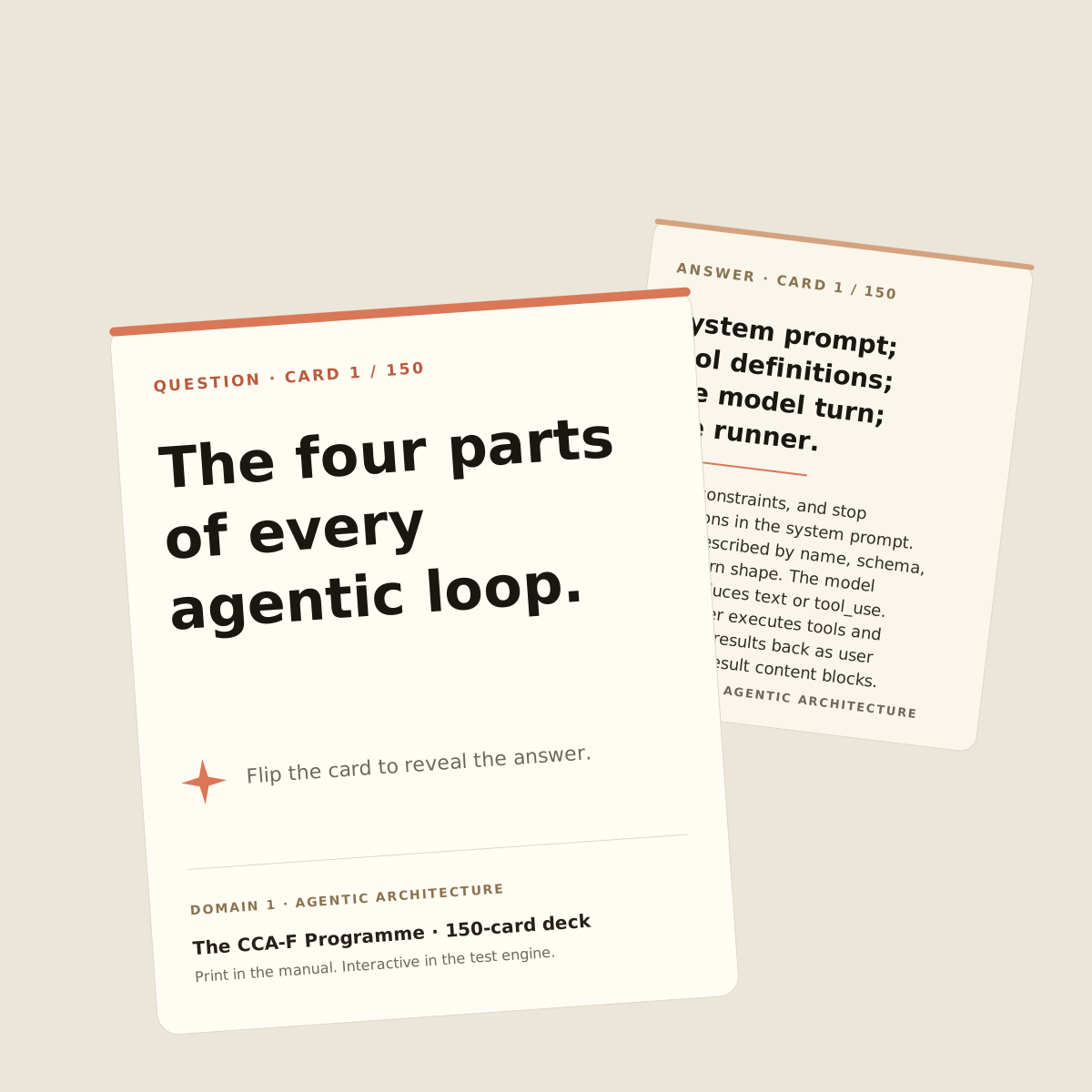
150 cards covering the definitions, defaults, and decision rules that must be instant by exam day, in print in the manual and interactive in the engine with know‑it recycling for the final week.
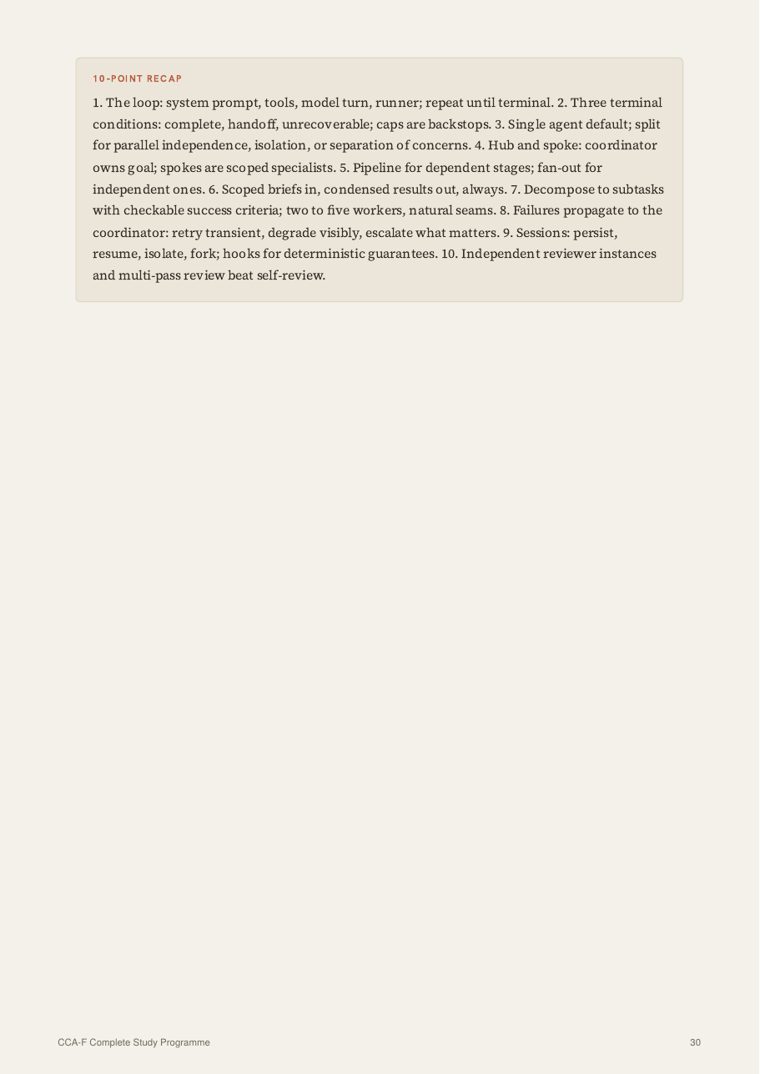
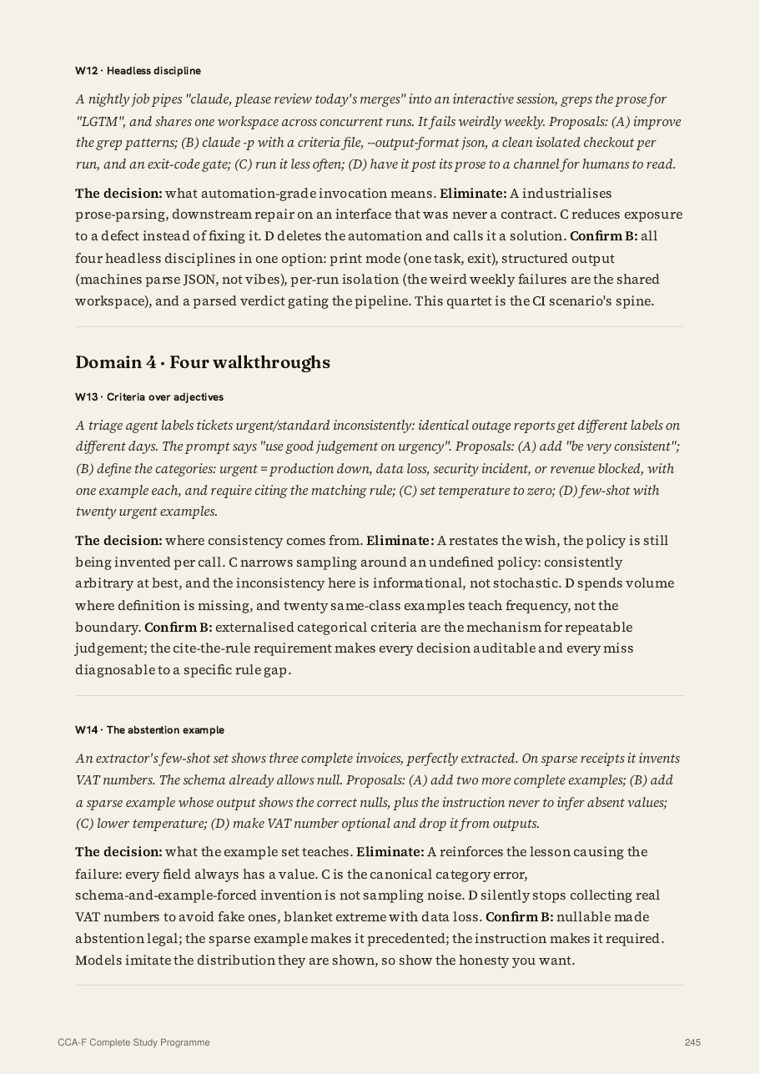
Straight from the finished books: a domain‑test page, a scenario playbook’s decision ledger, a fully worked elimination, and a mock paper.


All 550 items are written against the published blueprint and the six public scenario contexts. No leaked content, nothing that breaches the candidate agreement, and nothing that teaches you less than thinking does.
Each answer key explains the correct option and why each of the three wrong options fails. The exam’s distractors follow twelve recurring archetypes; the manual names them and trains you to label them on sight.
Five full papers at the exact domain weights, a 120‑minute clock in the engine, score‑interpretation against the 720 band, and a sitting protocol that makes every mock predictive rather than comforting.
Ten hands‑on labs with solutions, ten annotated build recipes, and six end‑to‑end scenario playbooks, because the exam tests judgement about systems, and judgement is built by building.

Instant per‑option feedback: the rationale, plus the specific reason the option you picked fails.
Sixty questions at the real weights, flag‑for‑review, a 120‑minute clock, then an indicative scaled score and a full worked review.
Flip, shuffle, and know‑it recycling across all 150 cards, filterable by domain.
The exam at a glance, anatomy of a scenario question, the complete map to Anthropic Academy’s free courses, study sequences, and the engine guide.
Request mechanics, tokens and windows, a tool call end to end, sampling, model tiers, and the exam’s working vocabulary.
Full‑depth chapters on agentic architecture, tools and MCP, Claude Code, prompting and structured output, and context and reliability, each with case studies, decision tables, a reference card, and a 50‑question test with worked key.
The six published exam scenarios designed end to end: brief, architecture, decision ledger, failure drills, exam mapping.
Ten labs from the agentic loop to compaction and review, with solutions, common stumbles, extensions, and ten build recipes.
Twelve wrong‑answer archetypes, per‑domain signal tables, and twenty‑two fully worked eliminations.
The 150‑card deck in print, grouped by domain.
14‑day and 28‑day plans, the mock protocol, a score tracker, a subdomain question index, ninety rapid‑recall drills, error logs, and the full glossary.
Booking, sitting tactics for 60 questions in 120 minutes, integrity, after the result, and the resource directory.
Both books, the engine, and the flashcards, delivered digitally the moment you buy. Two built‑in study plans take it from here: roughly twenty hours over two weeks for experienced builders, or forty over four weeks alongside Anthropic Academy’s free courses.
A 12‑page preview of the study manual, sent to your inbox. No purchase required.
Secure checkout. Prices exclude any applicable VAT, calculated at checkout.
No. This is an independent study programme. It is not affiliated with, authorised by, endorsed by, or sponsored by Anthropic. The exam itself is booked separately through Anthropic’s certification platform.
No, deliberately. All 550 questions are original practice items written against the published exam blueprint, weights, and the six public scenario contexts. Using leaked live items breaches the candidate agreement and can void the credential.
Sixty scenario‑based multiple‑choice questions in a proctored sitting of around 120 minutes, scored on a 100–1,000 scale with a pass mark of 720. There is no negative marking, so answer every question. Registration, the free official courses, and the official practice exam live on Anthropic’s certification platform at anthropic.skilljar.com; verify current details there before booking.
Digitally, immediately after purchase: both PDFs for download plus access to the test engine. The engine is a static web app and your progress is stored only in your own browser.
Engineers, architects, and technical leads preparing for the Foundations tier. The manual includes a primer and a 28‑day plan for those newer to Claude’s stack, and a 14‑day intensive for experienced builders.
Roughly twenty hours over two weeks for experienced builders, or roughly forty hours over four weeks alongside Anthropic Academy’s free courses if the stack is newer to you. Both schedules are laid out day by day in Part 8.